Application assurance

CALB storage planning changes with the operating environment

Commercial facilities, infrastructure sites, and larger energy programs do not ask the same questions of a battery energy storage system. Application, grid connection, available space, control objective, and service model each alter the review path. Begin with those practical differences before selecting a configuration.

Battery energy storage systems in commercial and utility settings

Commercial & industrial

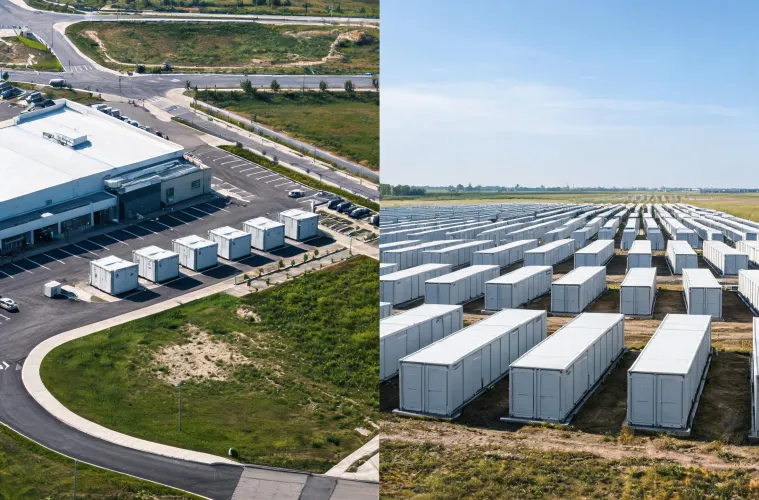
Facilities often begin with a load profile, demand charges, resilience objective, and available electrical room. The review should also consider access for installation and maintenance, HVAC assumptions, fire-safety design, and how an EMS will coordinate the system with site loads or solar generation.

Renewable integration

Pairing a BESS with PV adds questions about DC/AC ratio, inverter and PCS coordination, curtailment strategy, export constraints, and data visibility. The goal is not simply to add capacity; it is to define which operating events the storage system is expected to address.

Utility and infrastructure

Larger programs can require attention to interconnection studies, grid-code requirements, SCADA integration, availability planning, and long-term asset management. Project parties should establish which evidence is needed at each approval point and who owns updates as the design develops.

Climate

Ambient temperature, ventilation, water exposure, corrosion risk, and elevation can influence equipment enclosure, thermal behavior, and maintenance access. Environmental suitability must be verified for the selected equipment, not inferred from a single marketing image.

Grid & controls

Anti-islanding, protection settings, communications protocols, and grid-forming requirements depend on the interconnection context. A BMS, PCS, and EMS conversation should identify data ownership and control hierarchy early.

Duty cycle

Cycle life statements depend on defined depth of discharge, temperature, charge rate, and other conditions. A project should describe its expected use profile so that an appropriate comparison can be made.

Scope

Write the application in operational terms.

Interfaces

Map the electrical and communications boundaries.

Evidence

List technical, safety, and logistics documents.

Handover

Assign records and escalation responsibilities.

Describe the application before comparing equipment

A concise project brief can include target power, duration, region, site conditions, interconnection stage, and the documents the team needs to review. Those inputs create a more credible starting point than a generic performance request.